10 Things You Need for Hydrographics

Based in Alexander, Arkansas, Liquid Concepts sells the products you need to get into DIY hydrographics or take your skills to the next level. Hydrographics has many names, most commonly hydro dipping and water transfer printing. It’s a surprisingly simple process that allows you to transfer a preprinted design from dissolvable film onto various items, including car parts, helmets, tools, bicycles, and planters. 

It’s essential to take each hydro dipping step slowly to ensure accuracy. After prepping the item, place the film in clean water in a large container. Spray the activator, which dissolves the film until the floating preprinted design remains. Slowly dip the item until the design fully covers it and enters the nooks and crannies. Remove the item and let it dry completely before applying the clear top coat and doing touch-ups.

11 Things You Need for DIY Hydrographics 

There are 11 key items you need for the DIY hydro dipping process, including:

  1. Object to dip: Select a 3D item that won’t get damaged by water. If you can safely submerge it and it won’t fall apart, you can dip it.
  2. DIY hydrographic kit: We offer several options featuring various designs, or we can create a custom design for you. Our kits include much of what you need for the process, such as a tack cloth and film.
  3. Large square or rectangular container filled with water: The size of your container depends on your item. It must be wide and long enough to fit the item and film, and deep enough so you don’t hit the bottom during the process. Ensure the water level isn’t high enough to spill over the sides while dipping.
  4. Fine-grit sandpaper: You need this for the prep and finishing stages, so get at least two sheets.
  5. Clean rags: They're handy for wiping up drips or spills.
  6. Water and mild dish soap: The object must be completely clean before dipping so the design adheres properly. Using water and a little bit of mild dish soap is ideal. After washing the item, dry it with a clean rag, then let it air dry thoroughly before starting the dipping process.
  7. Gloves and a face mask: Proper protection is crucial. Wear a high-quality face mask and disposable gloves during the hydro-dipping process. Keep extra gloves close by in case you need to switch them.
  8. Primer: Using a high-quality primer increases the likelihood of the design adhering properly to your item. Apply it after cleaning your item but before the base coat.
  9. Base coat: Using the correct color is essential, as it can significantly influence the finished results.
  10. Top coat: It helps protect the design and is available in matte, semigloss, and gloss finishes, so you can decide what type of look you want for your item.
  11. Activator: It dissolves the film at the start of the dipping process.

You can buy the above items individually, but Liquid Concepts sells complete dip kits with almost everything required. Our hydro dipping kits include:

  • Instructional pamphlet
  • Approximately 16.4 feet of film
  • 2 Scotch-Brite pads
  • 2 alcohol pads
  • Paint mask
  • 3 sets of gloves 
  • Tack cloth
  • 12-ounce primer 
  • 12-ounce paint
  • 12-ounce clear coat (matte/gloss) 
  • 12-ounce Liquid Concepts aerosol activator

Why Liquid Concepts?

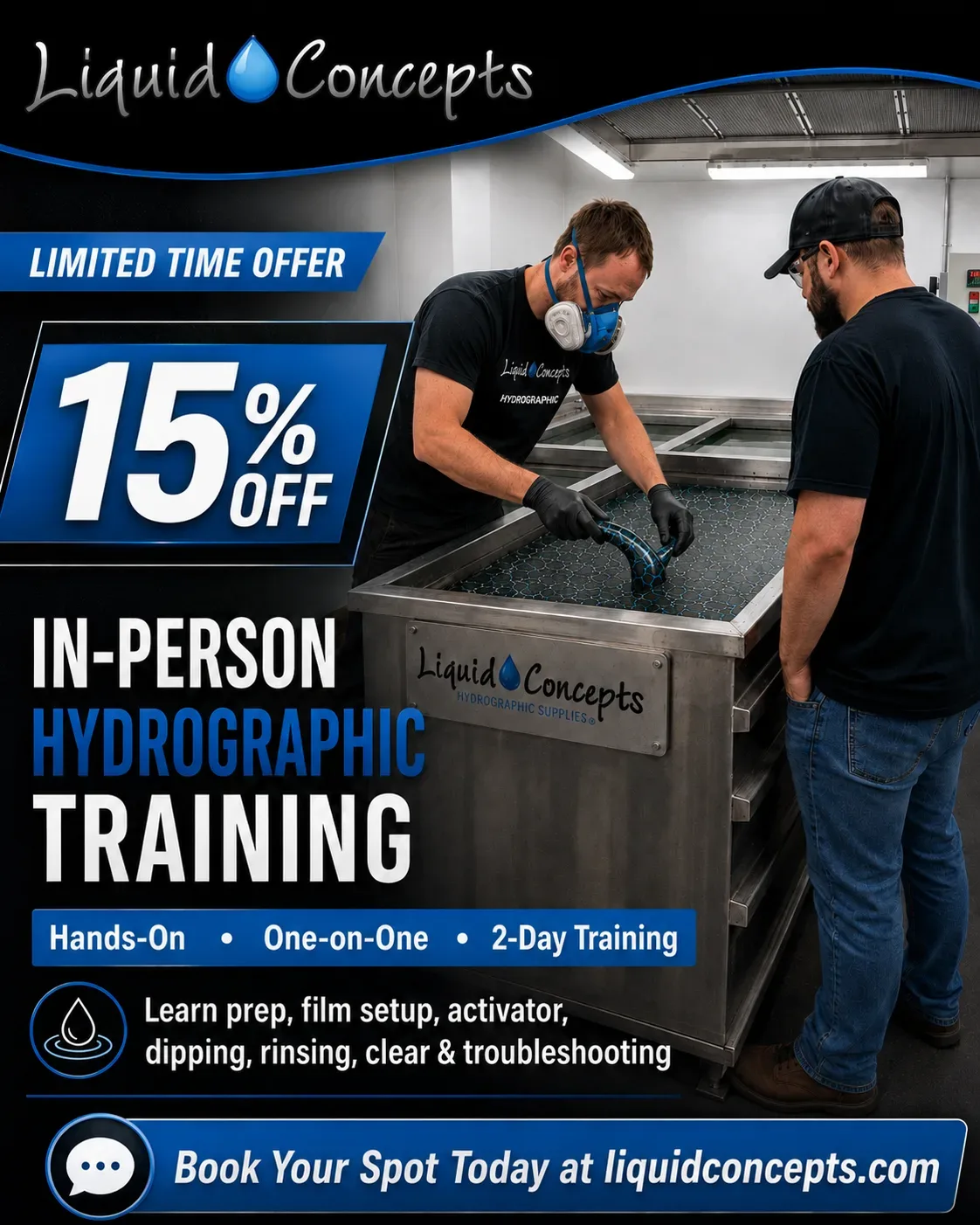
Liquid Concepts has helped numerous clients learn the art of hydro dipping, whether by offering the necessary items in a comprehensive, affordable DIY water transfer kit or by being available to answer questions about the process. We also provide convenient training opportunities online, at our state-of-the-art facility, or onsite at your facility. Additionally, our website's resources section offers lots of information to help you learn more about the process. 

If you have any questions, contact our Liquid Concepts team. Call or email us today, or message us through our website. 

November 29, 2021