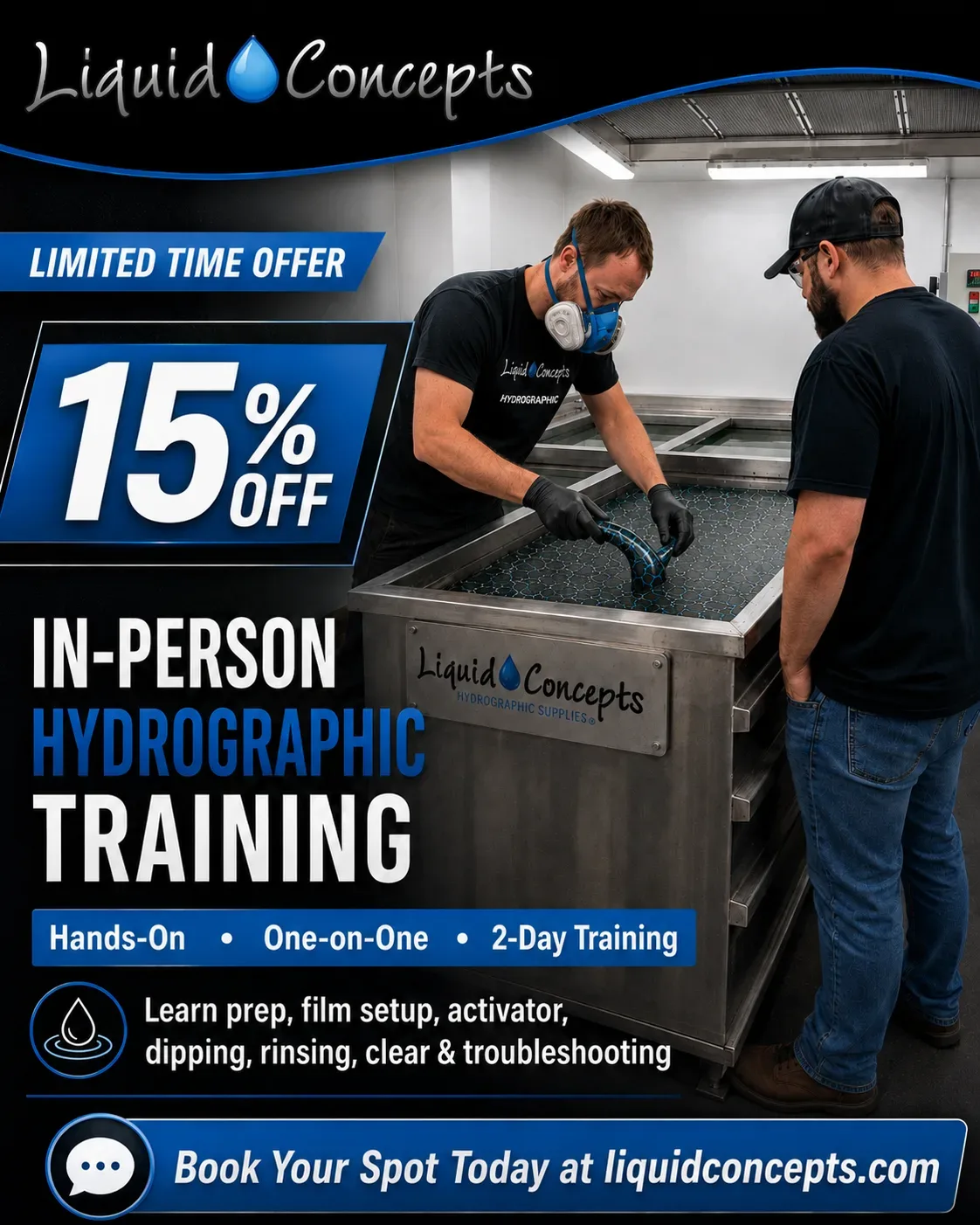
Hydrographic Printing in Marketing

Hydrographic printing, which is also known as water transfer imaging and immersion printing, is a finishing process that allows complex printed designs to be applied to three-dimensional objects. The process is often used to apply carbon fiber designs to automobile interior trim and camouflage patterns to firearms and hunting equipment. Hydrographic printing is extremely versatile and can be used to apply designs to objects made out of plastic, metal, glass and wood, and it offers superior resistance to chemicals and UV rays.

The technology used to transfer printed designs onto three-dimensional objects was developed in the early 1980s, but the hydrographic printing process has only become widely used in the last two decades. The hydrographic printing market was worth about $4.41 billion in 2024, but that figure is expected to grow to more than $7 billion by 2032.

Hydrographic printing has become an important marketing tool in recent years as it allows companies to customize their products and make their brands stand out. The process allows eye-catching designs to be applied to products and promotional materials that boost brand visibility and create unique and memorable experiences for consumers.

What Is Hydrographic Printing?

Hydrographic printing is so named because the process takes place in water. The pattern or design that will be applied to a three-dimensional object is printed on a polyvinyl alcohol film, and then this PVA hydrographic film is placed on the surface of a tank containing water. The three-dimensional object, which is called a substrate, is submerged in the water, and the pattern is transferred.

Choosing a Substrate

The hydrographic printing process is used to apply designs to substrates made out of plastic, metal, glass, wood and other materials. Just about any material that is resistant to water can be used in the hydrographic printing process, but some plastics with low surface energies like polypropylene and polyethylene must be flame treated first. Briefly exposing the surface of an object to a controlled flame oxidizes it and increases surface energy, which makes it easier for printed designs to bond.

Applying a Base Coat

When a substrate is prepared for hydrographic printing, a base coat is applied. The color of the base coat is chosen carefully because it will greatly influence the appearance of the finished item. Tan or brown base coats are usually used when a camouflage pattern will be applied, and gray or silver base coats are used when the finished item will have a metallic appearance.

Immersing the PVA Hydrographic Film

When the PVA hydrographic film is placed on the water surface, it is sprayed with a chemical solution called an activator. The activator contains plasticizers and solvents that softens ink and allows it to stretch and adhere to the surface of the substrate. The PVA hydrographic film dissolves when it is placed on water, and the pattern is left behind.

Submerging the Substrate

When the substrate is submerged in the hydrographic printing dipping tank, the water’s surface tension creates pressure. This pressure allows the pattern to cover every part of the substrate and adhere to it. Once the process is complete, the substrate is removed from the dipping tank and dried. The final stage of the hydrographic printing process is applying a clear coat to the substrate that improves appearance and protects the surface.

Applications of Hydrographic Printing in Marketing

Hydrographic printing has become an invaluable marketing tool because it allows companies to create products and promotional materials that really stand out. The process allows complex patterns like camouflage, stone, metal or wood grain to be applied to almost any material, and that gives companies almost limitless branding and customization options.

Hydrographic printing can also save companies money. Making items out of carbon fiber is extremely expensive because the material is costly to produce and difficult to work with, which is why automobile manufacturers use hydrographic printing to create items that appear to be made out of carbon fiber for a fraction of the cost. The other benefits of using hydrographic printing in marketing include:

  • Branding customization: Companies are more successful when all of their products and marketing materials convey a clear brand message. Hydrographic printing allows businesses of any size to create unique branded items quickly and affordably. When companies can apply complex patterns and textures to materials of all shapes and sizes, they can produce customized items that create a clear brand identity.
  • Product differentiation: Hydrographic printing can really make products stand out in a crowded and competitive market. The process attracted a lot of attention when hunting equipment and firearms manufacturers started to use it to apply camouflage designs to their products. These products sold extremely well, and the business world took notice.
  • Enhanced consumer experiences: Applying a complex pattern to PVA hydrographic film is a relatively inexpensive process, which means companies can use hydrographic printing to produce items in short runs without investing heavily. This means the process can be used to create personalized items that make consumers feel valued and special.
  • Unique packaging: The way a product is packaged can greatly influence how well it sells. When products are packaged in materials like plastic, hydrographic printing can be used to apply eye-catching designs that attract attention and pique consumer interest. Unique package designs also tell consumers that a company really cares about its products and wants them to stand out.
  • Eye-catching point-of-sale displays: When consumers enter retail environments, they are bombarded with marketing messages. Point-of-sale displays must grab a consumer’s attention, which means they have to be interesting and eye-catching. Hydrographic printing can be used to create unique point-of-sale displays that send a powerful message and are hard to ignore.

Advantages of Hydrographic Printing for Marketing

Hydrographic printing has become extremely popular because it offers businesses so many benefits, and one of its biggest advantages is how quickly finished items can be produced. The process only requires a substrate, some PVA hydrographic film, and a dipping tank, which means the time between original idea and finished product can be measured in days or weeks instead of months. Other benefits of using hydrographic printing to create custom products and marketing materials include:

  • Affordability: Before hydrographic printing methods were developed in the 1980s, companies that wanted to apply complex designs to their products had to rely on stenciling. Applying designs in this way is time-consuming and expensive, which is why most products used to be monotone and uninspiring. Hydrographic printing can apply complex designs to almost any item, and it can also replicate the appearance of expensive materials like marble, brushed metal and carbon fiber.
  • Versatility: The hydrographic printing process is extremely versatile. Complex designs can be applied to materials like glass, plastic, metal, and even wood, and the process allows ink to stretch and cover substrates of all shapes and sizes. Companies can use hydrographic printing to apply logos, text or other branding elements to just about any product, and the process can also be used to create promotional and marketing materials that stand out and grab attention.
  • Durability: The last step of the hydrographic printing process is applying a durable clear coat. Thanks to this clear coat, hydrographically printed items can withstand the wear and tear of daily use. Printed designs that are easily damaged or fade over time lead consumers to believe that products are low quality and were manufactured cheaply, and that is something that no business wants.
  • Customization: Hydrographic printing’s affordability and versatility make the process an ideal solution for creating unique custom designs for marketing campaigns and limited run products. Making a stencil is an involved and costly process, but the designs printed on PVA hydrographic film can be created on computers quickly and easily. They can also be modified or revised in a matter of minutes.

Case Studies of Hydrographic Printing in Marketing

Hydrographic printing is used by companies in almost all industries because it is affordable and offers many unique benefits, but some industries rely on the process more than others. These industries include:

  • Automobile and automobile parts manufacturing: Most modern cars, pickup trucks and SUVs have interiors that appear to be trimmed with brushed metal, wood or carbon fiber. These materials are expensive, and they can also be dangerous in an accident. To reduce their costs and improve safety, most auto and auto parts manufacturers use hydrographic printing to make interior trim pieces. The process is also used to apply unique finishes to wheels and other exterior components.
  • Technology: Hydrographic printing is used to make accessories and cases for smartphones, tablets, laptops and other electronic devices. Companies in the technology sector prefer hydrographic printing because the process applies custom designs that can withstand the rigors of daily use.
  • Sports equipment: The hydrographic printing process can be used to apply stunning designs to everything from bicycle helmets to hockey sticks. The process is also ideal for limited run items, which is why sporting equipment manufacturers use it to produce branded merchandise for professional and amateur teams.
  • Consumer goods: Consumer goods manufacturers use hydrographic printing to make their products stand out and add a touch of luxury. Finishes like marble, wood, brushed metal and carbon give products a premium feel, and using the hydrographic printing process to apply them ensures that they will not fade or wear away.
  • Hunting equipment: If you visit a store that sells hunting equipment, you will soon notice that many of the products on display feature elaborate camouflage designs. Complex designs like this can only be applied to oddly shaped items by the hydrographic printing process.
  • Eyewear: Companies that manufacture eyeglass frames often use hydrographic printing to create products that appear to be made out of materials like tortoiseshell. This allows consumers to enjoy the looks of these materials without having to worry about harming an endangered species.

Hydrographic Printing is a Game Changer

Applying intricate designs to complex shapes was once extremely difficult and costly, but hydrographic printing makes it easy and affordable. The process can be used to add stunning designs to almost any material, and the finished product will be durable and long-lasting as well as attractive. Hydrographic printing allows even small businesses to create stunning products and marketing materials that attract attention and build brand identity, and that leads to happy and loyal customers. If you want to grow your business and add some punch to your promotional efforts, you should learn more about the benefits of hydrographic printing and its effectiveness as a dynamic marketing tool.


May 1, 2025